

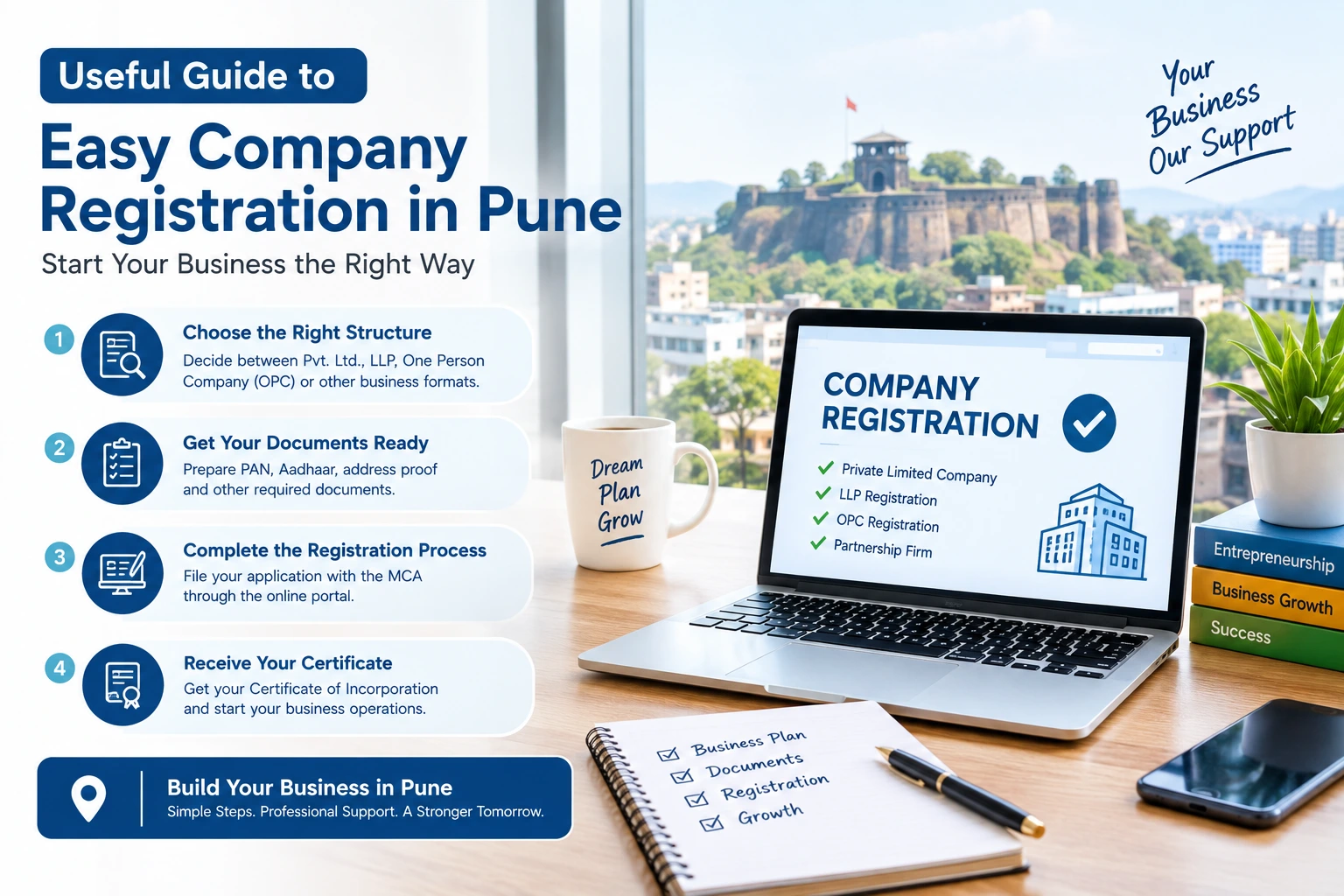
Starting a business is an exciting step, but the registration process can often seem complicated for first-time entrepreneurs. Choosing the right business structure, preparing documents, selecting a suitable name, completing government forms, and understanding post-registration compliance are all important parts of establishing a business legally.
A well-planned registration process can make incorporation more organized and reduce unnecessary delays. Whether you are launching a startup, professional service, trading business, consultancy, or another commercial venture, understanding the basic requirements before beginning can help you make informed decisions.
This guide explains the important steps involved in company registration, documents generally required, factors to consider when choosing a business structure, common mistakes to avoid, and how professional assistance can simplify the process.
Search Intent Analysis
This guide is primarily designed for entrepreneurs who want to understand how to register a business in Pune and make the process easier.
The likely search intent includes:
- Understanding the company registration process
- Learning which business structure is suitable
- Knowing the documents required
- Understanding incorporation timelines and costs
- Finding professional registration assistance
- Learning about post-registration compliance
The content therefore addresses both informational and commercial search intent while providing practical guidance for prospective business owners.
Why Should You Register Your Business?
Business registration gives an organization a formal legal identity and establishes a structured framework for conducting commercial activities.
Depending on the chosen structure, registration can provide advantages such as:
- Separate legal identity
- Limited liability protection
- Better business credibility
- Easier opening of business bank accounts
- Improved access to certain funding opportunities
- Structured ownership
- Better continuity of operations
The appropriate structure depends on factors such as the number of owners, business activity, expected turnover, investment plans, liability considerations, and long-term growth objectives.
Choose the Right Business Structure
One of the first decisions an entrepreneur needs to make is selecting the appropriate legal structure.
Common options in India include:
Private Limited Company
This structure is commonly considered by businesses that want a separate legal entity, limited liability protection, structured ownership, and potential scalability.
Limited Liability Partnership
An LLP can be suitable for businesses operated by two or more partners who want partnership-style management with limited liability protection.
One Person Company
An OPC can be considered by eligible individual entrepreneurs who want to operate through a corporate structure.
Partnership Firm
A traditional partnership may be appropriate where two or more individuals want to operate a business under a partnership arrangement.
Sole Proprietorship
A proprietorship can be suitable for certain small businesses operated by an individual, although it does not create a separate legal entity from the owner.
Choosing the right structure at the beginning can prevent complications when the business starts expanding.
Step-by-Step Process for Company Registration
1. Decide the Business Structure
First, determine which legal structure aligns with your business requirements.
Consider:
- Number of owners
- Business risk
- Investment requirements
- Expected growth
- Compliance responsibilities
- Funding plans
- Ownership and management preferences
Do not select a structure solely because it is popular. The decision should be based on the specific needs of the business.
2. Select a Suitable Company Name
The proposed company name should be distinctive and comply with applicable naming rules.
Before submitting the name, entrepreneurs should consider whether it:
- Is sufficiently unique
- Conflicts with an existing company name
- Conflicts with a registered trademark
- Accurately represents the proposed business
- Meets applicable regulatory naming requirements
Conducting preliminary checks can reduce the possibility of name-related complications.
3. Obtain Digital Signatures
Incorporation applications are generally submitted electronically, so the relevant individuals may require Digital Signature Certificates.
Identity and address information is generally required for obtaining the necessary digital signatures.
4. Prepare the Required Documents
Correct documentation is one of the most important parts of the registration process.
Common documents may include:
- PAN card
- Identity proof
- Address proof
- Passport-size photographs
- Email address
- Mobile number
- Registered office proof
- Rent or lease agreement, where applicable
- No-objection certificate, where applicable
Additional documents may be required depending on the business structure and circumstances of the applicants.
5. Prepare Registered Office Details
A company requires a registered office address for official communications.
The documentation for the registered office should satisfy the applicable requirements.
Entrepreneurs should ensure that the address, utility bills, agreements, and ownership-related information are accurate and consistent.
6. Complete the Incorporation Application
Once the necessary information and documents are ready, the incorporation application can be submitted through the applicable Ministry of Corporate Affairs process.
The application generally includes information relating to:
- Proposed company name
- Directors
- Members or subscribers
- Registered office
- Business activities
- Capital structure
- Other required declarations
Applications should be carefully reviewed before submission to reduce errors and the possibility of resubmission.
How to Make the Registration Process Easier
The incorporation process becomes much easier when entrepreneurs prepare before submitting the application.
Keep Documents Ready
Collect identity, address, photographs, and registered-office documents in advance.
Verify Information
Check spelling, addresses, PAN details, and other information across all documents.
Research the Business Name
Conduct preliminary company and trademark checks before selecting a name.
Understand Compliance
Do not focus only on incorporation. Consider accounting, taxation, annual filings, GST applicability, and other relevant obligations.
Seek Professional Guidance
If you are unfamiliar with the process, professional assistance can help you understand the required steps and documentation.
Understanding Company Registration Costs
The total cost of incorporation depends on several factors.
These may include:
- Government filing fees
- Stamp duty
- Digital signature charges
- Professional fees
- Additional registration requirements
- Applicable taxes
The final amount can vary depending on the company’s structure, authorized capital, state-specific requirements, and services selected.
Entrepreneurs should request a transparent quotation that clearly explains what is included.
How Long Does Registration Take?
The time required for incorporation can vary.
Factors affecting the timeline may include:
- Name approval
- Completeness of documents
- Government processing
- Resubmission requirements
- Clarifications
- Registered office documentation
Therefore, entrepreneurs should avoid relying on a fixed timeline without considering their individual circumstances.
Proper preparation can help minimize avoidable delays.
Why Professional Assistance Can Be Useful
Business incorporation involves legal forms, documentation, declarations, and procedural requirements.
Experienced Company registration consultants in Pune can help entrepreneurs understand the registration process and organize the required documentation.
Professional assistance may include:
- Business structure guidance
- Name selection support
- Document verification
- Incorporation application assistance
- MOA and AOA guidance
- Registration-related coordination
- Post-incorporation compliance guidance
This can be particularly useful for first-time entrepreneurs who are unfamiliar with corporate registration procedures.
Company Registration and Business Planning
Registration should be viewed as the beginning of the business journey rather than the final step.
After incorporation, businesses may need to manage:
- Accounting
- Taxation
- Annual filings
- GST, where applicable
- Payroll
- Licenses
- Employee compliance
- Financial reporting
A good business plan should therefore include both incorporation and ongoing compliance.
Entrepreneurs exploring Company formation in Pune should consider their future business requirements before selecting a legal structure.
Benefits of Professional Business Support
Working with an experienced professional can provide several practical benefits.
Saves Administrative Time
Entrepreneurs can focus on business planning while professionals assist with documentation and procedural requirements.
Reduces Documentation Errors
Professional review can help identify missing or inconsistent information before submission.
Provides Business Structure Guidance
An experienced advisor can explain the differences between available structures based on the business model.
Helps With Ongoing Requirements
A business may require accounting, taxation, and compliance support even after incorporation.
Private Limited Company: When Should You Consider It?
A private limited company may be suitable for entrepreneurs who want a formal corporate structure and intend to build a scalable business.
It can be particularly relevant for startups and businesses that may eventually seek external investment or establish structured shareholding arrangements.
Entrepreneurs considering Private limited company registration in Pune should evaluate the associated compliance requirements along with the benefits before making their final decision.
Common Mistakes to Avoid
Choosing a Business Structure Without Research
Different structures have different legal, tax, and compliance implications.
Selecting a Name Without Checking Availability
A name that conflicts with an existing entity or trademark may create problems.
Submitting Incomplete Documents
Missing documents can result in delays or requests for resubmission.
Ignoring Post-Registration Compliance
Incorporation does not eliminate ongoing accounting, tax, and statutory responsibilities.
Choosing a Provider Based Only on Price
The cheapest option may not provide the level of professional support your business requires.
How to Choose a Business Consultant
If you are considering working with a business consultant in Pune, evaluate the provider based on:
- Professional experience
- Transparency
- Service scope
- Communication
- Documentation support
- Knowledge of applicable regulations
- Post-registration assistance
Ask questions about the complete process and clarify the services included before making a decision.
Why Choose Azalea Advisors?
Azalea Advisors assists entrepreneurs and businesses with company registration and related business support requirements.
Professional guidance can make incorporation more organized by helping business owners understand the documentation, registration procedure, and applicable compliance requirements.
Whether you are establishing a startup, professional firm, trading business, or service company, it is important to select a structure that aligns with your present requirements as well as future plans.
A clear registration strategy can help create a stronger foundation for business operations.
Frequently Asked Questions
Q1. What is the first step in registering a company?
The first step is generally deciding on the appropriate business structure and understanding the requirements applicable to that structure.
Q2. What documents are usually required?
Common documents include PAN, identity proof, address proof, photographs, and registered-office documents. Exact requirements vary according to the applicant and business structure.
Q3. How long does company registration take?
The timeline varies based on documentation, name approval, government processing, and whether clarification or resubmission is required.
Q4. Can I register a company without professional assistance?
Yes, eligible applicants can complete the applicable registration process themselves. However, professional guidance can be useful for understanding documentation and compliance requirements.
Q5. Is a registered office required?
Yes. A company needs a registered office address capable of receiving official communications.
Q6. Does company registration complete all business compliance?
No. After incorporation, businesses may have ongoing accounting, tax, annual filing, licensing, and other compliance responsibilities depending on their activities.
Q7. Can I change my business structure later?
Certain business structures can be converted or reorganized subject to applicable legal provisions and conditions. It is therefore useful to consider future plans before incorporation.