

A Private Limited Company is one of the most widely used business structures in India because it provides limited liability protection to its shareholders and creates a separate legal identity for the business. It is suitable for startups, growing businesses, service providers, manufacturers, technology companies, and entrepreneurs who want to establish a structured business entity.
A private company generally requires a minimum of two members and two directors, subject to the requirements of the Companies Act, 2013. The structure can have up to 15 directors without special approval, while additional directors may be appointed subject to applicable legal requirements.
For entrepreneurs planning Company formation in Pune, understanding the incorporation procedure, documents, statutory requirements, and post-registration compliance is essential before starting the application process.
What Is a Private Limited Company?
A Private Limited Company is a separate legal entity incorporated under the Companies Act, 2013. Unlike a sole proprietorship or traditional partnership, the company has an identity separate from its shareholders.
This means the company can:
- Own assets in its own name
- Enter into contracts
- Open a corporate bank account
- Employ staff
- Raise funds
- Conduct commercial activities
- Sue or be sued in its own name
The liability of shareholders is generally limited to the amount they have agreed to contribute or invest in the company, subject to applicable law.
Key Features of a Private Limited Company
Before starting the registration process, entrepreneurs should understand its major characteristics.
Separate Legal Identity
The company is legally separate from its owners. This provides continuity even when shareholders or directors change.
Limited Liability
Shareholders generally have limited financial liability, subject to the applicable provisions of law.
Perpetual Succession
The company can continue to exist even if a shareholder or director leaves, resigns, or dies.
Better Business Credibility
A registered company can provide a more formal structure when dealing with customers, suppliers, banks, and potential investors.
Fundraising Opportunities
Private companies can raise capital through permitted methods and may be more suitable than informal structures for businesses planning future investment.
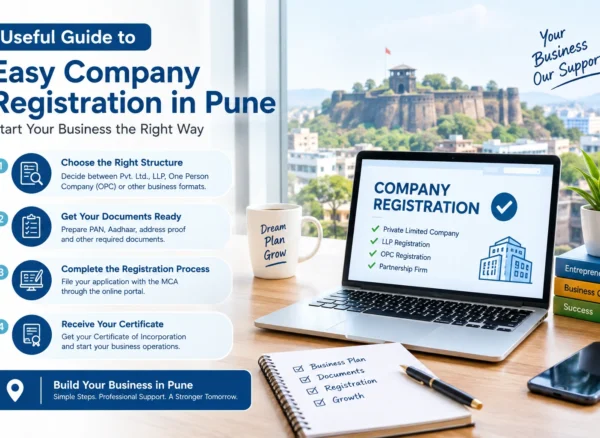
Procedures for Private Limited Company Registration in Pune
The incorporation process involves several stages. Proper documentation and accurate information can help avoid unnecessary delays.
1. Obtain Digital Signature Certificates
The proposed directors generally require Digital Signature Certificates (DSCs) because incorporation documents are filed electronically.
Applicants typically need to provide identity and address-related documents along with the required photographs and other information.
The information submitted should be consistent across all documents.
2. Choose a Suitable Company Name
Selecting a suitable name is an important part of incorporation.
Entrepreneurs should consider at least a few suitable name options and ensure that the proposed name:
- Is distinctive
- Does not conflict with an existing company or LLP
- Does not violate applicable naming rules
- Does not improperly use a registered trademark
- Is appropriate for the proposed business activities
The proposed name is submitted through the applicable MCA incorporation process.
3. Name Approval
The Central Registration Centre (CRC) reviews the proposed name application.
If the name meets the applicable requirements, it can be approved for incorporation. If the proposed name does not satisfy the requirements, the applicant may need to provide another name or make the required changes.
Checking trademark availability before submitting the application can reduce the possibility of future branding conflicts.
4. Prepare Director and Subscriber Details
Details of the proposed directors and first subscribers must be provided as part of the incorporation process.
Documents may include:
- PAN card
- Identity proof
- Address proof
- Passport-size photograph
- Contact details
- Other documents required under the applicable incorporation procedure
All information should be carefully verified before filing.
5. Decide the Number of Directors
A private company generally requires at least two directors.
The maximum number of directors that can ordinarily be appointed without special approval is 15. Additional directors can be appointed subject to the provisions of the Companies Act and applicable approvals.
The proposed directors should meet the eligibility and identification requirements applicable to directors.
6. Provide the Registered Office Address
A company must have a registered office address for receiving official communications.
Depending on the circumstances, documents may include:
- Electricity or utility bill
- Ownership document or rent/lease agreement
- No-objection certificate from the property owner, where applicable
- Address proof
The registered office details should be accurate because government communications and statutory notices may be sent to this address.
7. File the Incorporation Application
The incorporation application is submitted electronically through the MCA system.
The application contains information relating to:
- Company name
- Registered office
- Directors
- Subscribers
- Share capital
- Business activities
- Other incorporation details
The applicable forms and procedures may change from time to time, so applicants should use the current MCA requirements at the time of filing.
8. Prepare MOA and AOA
Two important documents associated with incorporation are the Memorandum of Association (MOA) and Articles of Association (AOA).
Memorandum of Association
The MOA describes the company’s fundamental objectives and scope of activities.
It generally establishes the purpose for which the company is formed and defines the framework within which it operates.
Articles of Association
The AOA contains rules relating to the internal management and administration of the company.
It may cover matters such as:
- Share transfers
- Meetings
- Voting rights
- Appointment and powers of directors
- Share-related procedures
- Internal governance
Both documents should be prepared carefully because they form an important part of the company’s legal framework.
9. Obtain Director Consent and Signatures
The proposed directors and first subscribers are required to provide the necessary declarations, consents, and signatures as prescribed under the incorporation process.
Incomplete or inconsistent documentation can result in additional clarification requirements.
10. Receive the Certificate of Incorporation
Once the Registrar of Companies approves the incorporation application and all requirements are satisfied, the company receives its Certificate of Incorporation.
The certificate confirms the legal incorporation of the company.
The company is then recognized as a separate legal entity.
Post-Incorporation Requirements
Registration is not the end of the process. A newly incorporated company may need to complete several post-incorporation formalities.
These may include:
- Opening a corporate bank account
- Issuing share certificates
- Maintaining statutory registers
- Maintaining books of accounts
- Appointing an auditor where applicable
- Filing required returns
- Completing applicable tax registrations
- Meeting other regulatory requirements
The exact obligations depend on the company’s activities, turnover, employees, and applicable laws.
GST Registration for Private Limited Companies
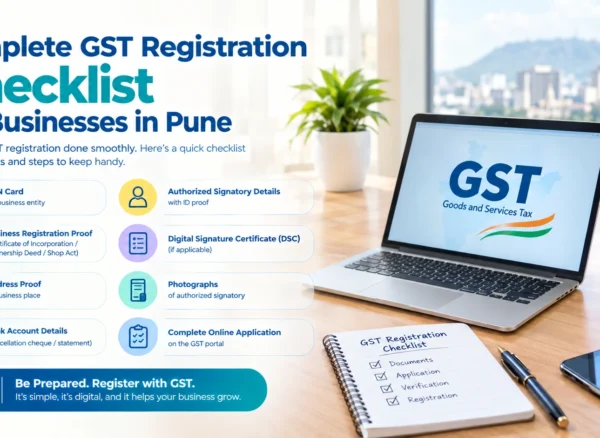
GST registration is not automatically mandatory for every company simply because it has been incorporated. Its applicability depends on factors such as turnover, nature of supply, interstate transactions, e-commerce activities, and other conditions under GST law.
Businesses selling goods or services through e-commerce platforms should specifically evaluate their GST obligations before beginning operations.
Maintaining accurate GST records and completing applicable returns on time is important for avoiding compliance issues.
Professional Tax and Other Compliance
Depending on the location and nature of the business, the company may also need to consider Professional Tax, Shops and Establishments requirements, employee-related registrations, and other applicable licenses.
Businesses should identify their compliance requirements based on their actual activities rather than assuming that every company requires the same registrations.
Documents Required for Registration
A typical incorporation process may require documents from both directors/subscribers and the registered office.
Director/Subscriber Documents
- PAN card
- Aadhaar or other accepted identity proof
- Address proof
- Photograph
- Email address
- Mobile number
Registered Office Documents
- Utility bill
- Rent or lease agreement, where applicable
- Ownership proof, where applicable
- Owner’s NOC, where applicable
Additional documents may be required depending on the applicant’s circumstances.
How Long Does Registration Take?
A straightforward incorporation application can often be completed within a relatively short period when the proposed name is accepted and documents are accurate.
However, the actual timeline can vary because of:
- Name approval
- Document verification
- Government processing
- Resubmission requirements
- Clarifications requested by authorities
Therefore, the commonly quoted timeline of 10 to 15 days should be treated as an estimate rather than a guaranteed processing period.
Benefits of Registering a Private Limited Company
There are several reasons entrepreneurs choose this structure.
1. Limited Liability Protection
Shareholders generally have limited liability, subject to applicable law.
2. Separate Legal Identity
The company exists independently from its shareholders.
3. Better Credibility
A formal corporate structure can increase confidence among customers, suppliers, lenders, and business partners.
4. Easier Business Expansion
A company can establish structured ownership and management arrangements as it grows.
5. Funding Opportunities
The structure can be suitable for businesses seeking permitted forms of external investment.
6. Perpetual Succession
The company can continue even when its members or directors change.
Why Professional Assistance Can Be Helpful
The incorporation process involves multiple forms, documents, declarations, and regulatory requirements. First-time entrepreneurs may find it difficult to understand which documents are needed and how different requirements connect.
Professional Company registration consultants in Pune can assist with:
- Business structure evaluation
- Name selection
- Document verification
- Incorporation filing
- MOA and AOA assistance
- Registration-related queries
- Post-incorporation compliance guidance
Professional assistance can reduce administrative workload and help entrepreneurs avoid common documentation mistakes.
Why Choose Azalea Advisors?
Azalea Advisors helps entrepreneurs and businesses with company incorporation and related compliance requirements.
The right professional support can help you understand the registration process before you begin and ensure that the documentation is prepared according to the applicable requirements.
Whether you are establishing a startup, professional practice, trading business, manufacturing company, or service-based organization, having a clear incorporation plan can make the process more efficient.
Entrepreneurs considering Private limited company registration in Pune should also think beyond incorporation and plan for accounting, taxation, annual filings, and other ongoing obligations from the beginning.
Common Mistakes to Avoid
Choosing an Unavailable Company Name
Failing to check existing company names and trademarks can create unnecessary complications.
Providing Incorrect Documents
Small differences in names, addresses, or other details may result in resubmission requirements.
Ignoring Registered Office Requirements
The registered office documentation should satisfy the applicable requirements.
Treating Incorporation as the Final Step
A company has continuing legal, accounting, tax, and reporting responsibilities after incorporation.
Not Planning Compliance
Understanding annual filing, accounting, GST, tax, and other applicable obligations early can prevent last-minute problems.
Private Limited Company vs Other Business Structures
Entrepreneurs should compare different structures before incorporation.
| Feature | Private Limited Company | LLP | Sole Proprietorship |
|---|---|---|---|
| Separate legal entity | Yes | Yes | No |
| Limited liability | Generally yes | Generally yes | Generally no |
| Minimum owners | 2 members | 2 partners | 1 |
| Funding suitability | High | Moderate | Limited |
| Compliance | Higher | Moderate | Lower |
| Best suited for | Growth-oriented businesses | Partnerships/professional businesses | Small individual businesses |
The right structure depends on ownership, funding, risk, compliance preferences, and long-term business objectives.
Frequently Asked Questions
Q1. How many directors are required for a private limited company?
A private limited company generally requires a minimum of two directors.
Q2. What is the maximum number of directors?
A company can ordinarily have up to 15 directors without special approval. Additional directors may be appointed according to applicable provisions.
Q3. Is a registered office mandatory?
Yes. A company must have a registered office capable of receiving official communications.
Q4. Is GST mandatory immediately after incorporation?
Not necessarily. GST applicability depends on the company’s turnover, business activities, supplies, and other statutory conditions.
Q5. What are MOA and AOA?
MOA defines the company’s fundamental objectives and scope, while AOA establishes rules for its internal management and administration.
Q6. Can a private company be started by two people?
Yes. A private company can generally be incorporated with at least two members and two directors, subject to applicable requirements.
Q7. How long does company registration take?
The timeline varies depending on name approval, documentation, government processing, and whether any clarification or resubmission is required.
Q8. Is professional help necessary for incorporation?
It is not necessarily mandatory, but professional assistance can make the process easier, particularly for first-time entrepreneurs dealing with documentation and regulatory requirements.
Conversion-Focused CTA
Starting a company is an important business decision, and getting the legal structure right from the beginning can make future operations easier.
If you are planning to incorporate a private limited company in Pune, Azalea Advisors can assist you with the registration process, documentation, incorporation formalities, and applicable compliance requirements.
Ready to start your company?
Contact Azalea Advisors to discuss your business requirements and get professional guidance for a smooth and organized incorporation process.